Skip to product information
1 of 5

MitchElectronics Audio FX Pack Micro Audio Amp/555 Synth Punk/VCO DIY Solder Kit

MitchElectronics Audio FX Pack Micro Audio Amp/555 Synth Punk/VCO DIY Solder Kit

Regular price £14.99
Regular price Sale price £14.99
Sale Sold out
Delivery calculated at checkout.
Quantity
View full details

Product Description

Unlock the world of hands-on electronics and sound design with this Triple Pack of MitchElectronics DIY Audio FX Kits, a perfect bundle for learners, hobbyists, and aspiring engineers.

This educational set includes three engaging soldering kits:

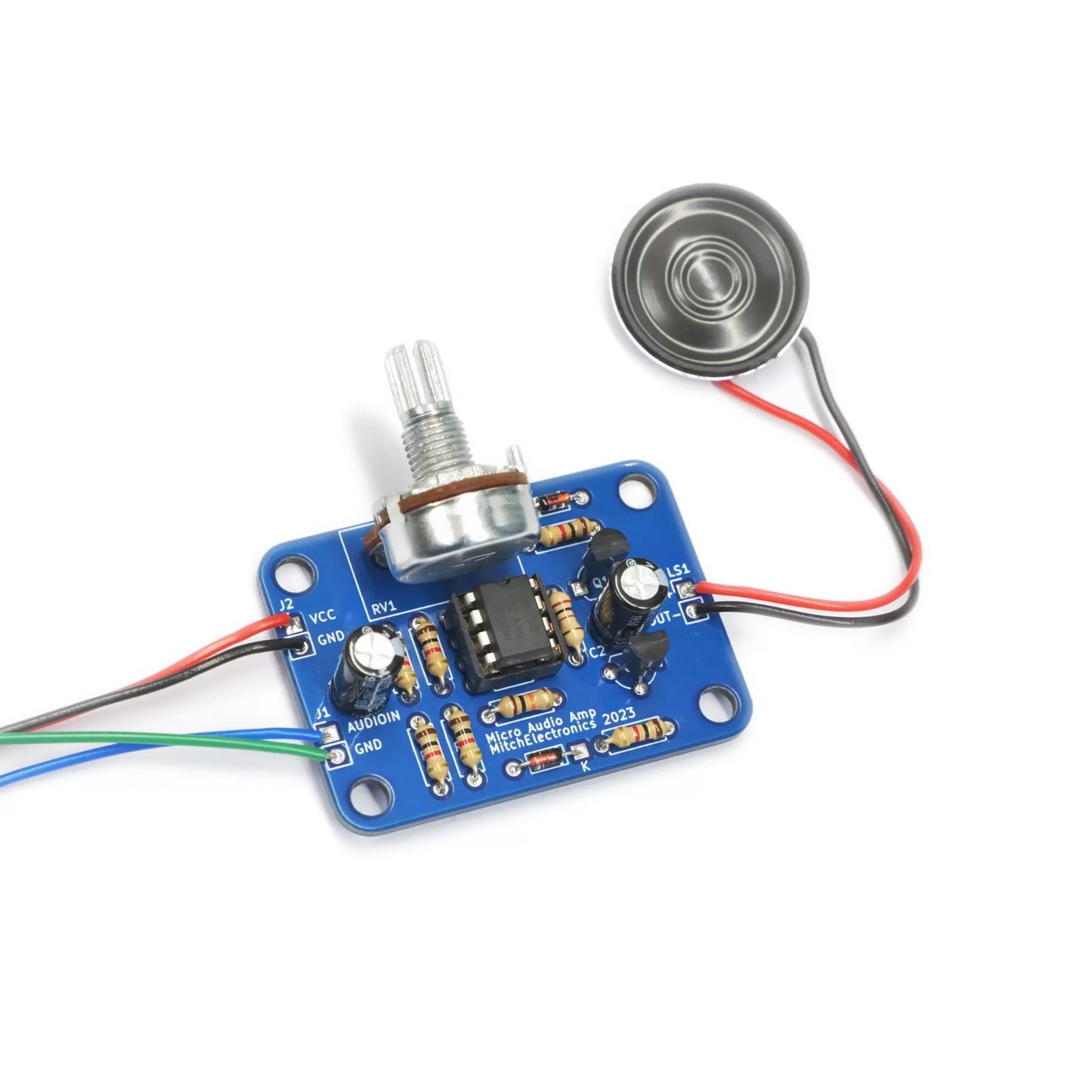
  • Audio Amplifier Kit – Learn the fundamentals of signal amplification and audio output.
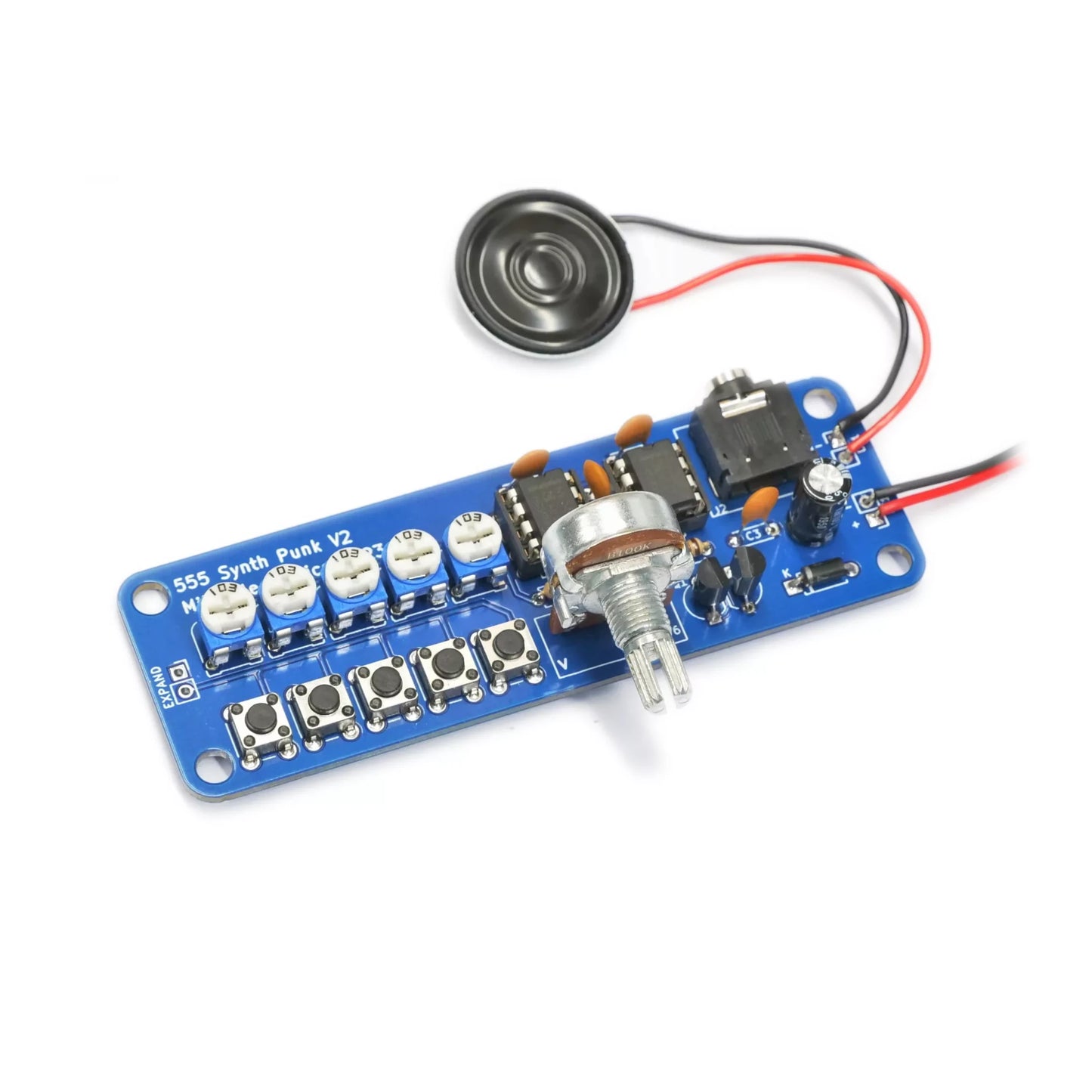
  • 555 Synth Punk Kit – Explore the iconic 555 timer chip while creating lo-fi, experimental sound effects.
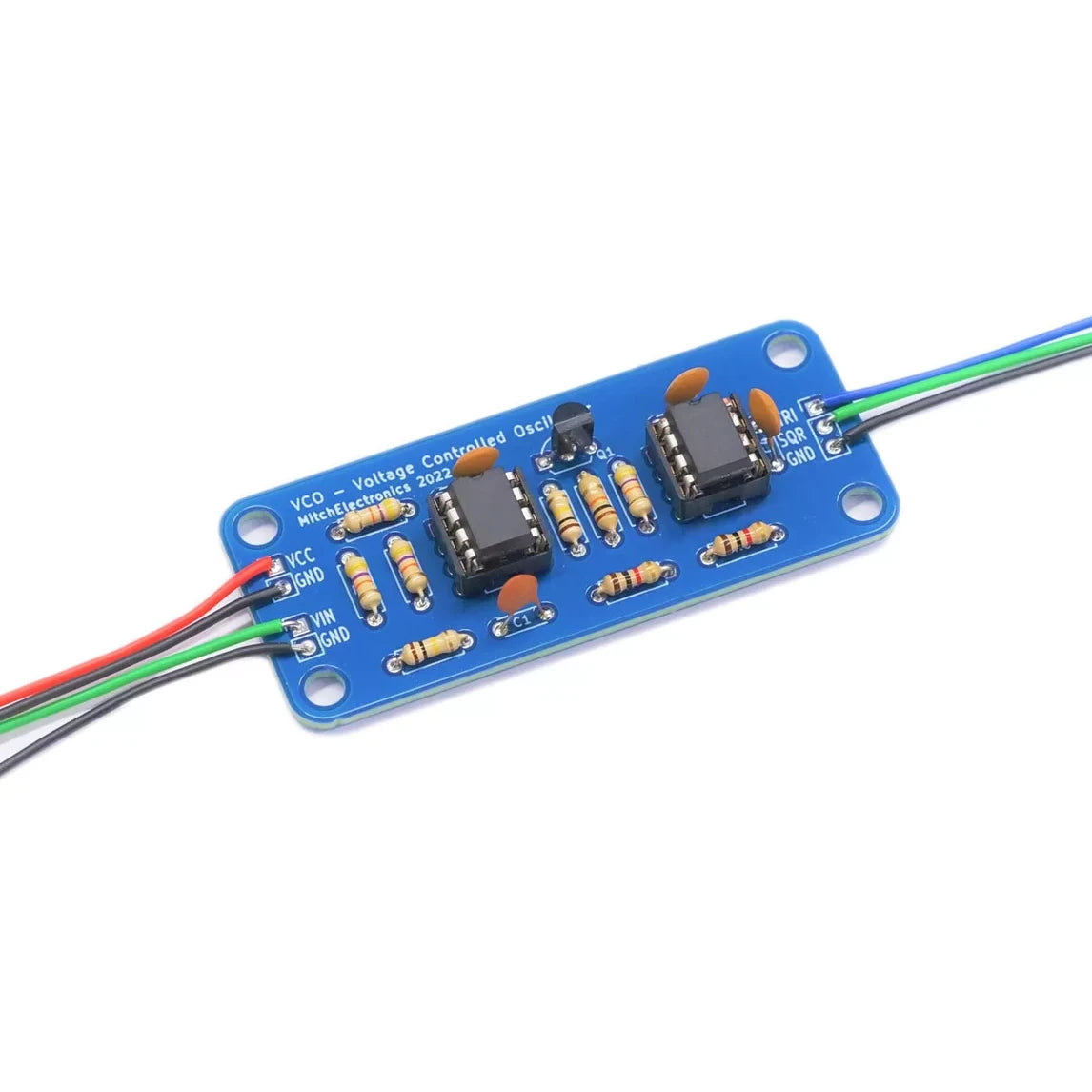
  • Voltage Controlled Oscillator (VCO) Kit – Dive into the core of analog synthesis and understand how electronic sound is generated and shaped.

Each kit is designed to teach essential electronics skills, including soldering, circuit assembly, and component identification, while also introducing key concepts in audio engineering and sound synthesis. Whether you're a beginner building your first circuit or an enthusiast expanding your knowledge, these kits provide a rewarding, hands-on learning experience.

Key Features:

  • Ideal for STEM education and practical electronics learning
  • Step-by-step assembly process encourages problem-solving and technical confidence
  • Produces real, usable audio effects and synthesizer sounds
  • Great for classrooms, workshops, or independent study
  • Suitable for beginners with basic soldering knowledge and beyond

By completing this bundle, users gain a deeper understanding of how audio circuits work, from amplification to waveform generation, making it an excellent introduction to DIY electronics and sound design.

Perfect for students, makers, and anyone interested in the intersection of electronics and music.


Micro Audio Amp

The Micro Audio Amp is a miniature audio amplifier based on the LM358 operational amplifier and uses a secondary push-pull amplifier for driving external speakers. Audio signals can be fed into the AUDIOIN pin, and the potentiometer provides a variable gain control. While the output of this kit is directly connected to a small speaker for testing purposes, it can easily be modified with an external connector for use with larger speakers (such as RCA connectors).

Product specifics

  • Component Count: 18
  • Battery Powered: Yes – PP3 9V
  • Operating Voltage: 5V to 16V
  • Operating Frequency: N/A
  • Dimensions (PCB): 48mm x 34mm
  • Mounting Holes: Yes – 4 x M4 (40mm x 26mm)
  • Prebuilt: No – Kit form
  • Batteries Not Included

Included in this kit

  • 1 x 8 DIP Socket
  • 1 x LM358
  • 1 x 100Ω Resistor
  • 6 x 1KΩ Resistor
  • 1 x 10KΩ Resistor
  • 1 x 100KΩ Potentiometer
  • 2 x 100µF Capacitor
  • 2 x 1N4148 Diode
  • 1 x 2N3904 BJT
  • 1 x 2N3906 BJT
  • 1 x Speaker
  • 2 x Red Wire
  • 2 x Black Wire
  • 1 x Green Wire
  • 1 x Blue Wire

Applications

The design of this kit has been chosen to demonstrate multiple circuit configurations, including inverting amplifiers with a virtual ground, AC coupling, and push-pull transistor amplifiers with cross-over bias. As such, the Micro Audio amp is an excellent kit for use in educational environments such as classrooms and remote practicals.

The Micro Audio Amp can also be used as an AC amplifier, enabling for the amplification of weak AC signals. One such example would be IR sensors that need to ignore constant IR emissions (such as those from the sun), and only react to sudden changes in IR emissions (such as remote controls).


555 Synth Punk

The 555 Synth Punk kit by MitchElectronics lets you build the iconic Atari Punk Console capable of producing unique sounds and stepped tones. Perfect for beginners!

The 555 Synth Punk kit is an electronic synthesiser that takes inspiration from the famous Atari Punk Console circuit. Each button can be adjusted via a potentiometer to produce a different tone, an the larger potentiometer can be used to create stepped sounds. Powered from a single 9V PP3, this kit contains everything you need to explore your inner musician, and the 3.5mm audio jack lets you connect your 555 Synth Punk to external speakers for use in live performances (a simple resistor divider can be used here to also allow for recording to microphone ports).

The 555 Synth Punk also has an additional expansion port that lets you connect additional potentiometer/switch panels to expand the number of tone buttons. This port can also be used with other resistive elements to create sounds based on movement, temperature changes, and even light.

Product specifics

  • Component Count: 27
  • Battery Powered: Yes – PP3 9V
  • Operating Voltage: 5V to 16V
  • Operating Frequency: N/A
  • Dimensions (PCB): 94mm x 31mm
  • Mounting Holes: Yes – 4 x M4 (86mm x 22mm)
  • Prebuilt: No – Kit form
  • Batteries Not Included

Included in this kit

  • 2 x 8 DIP Socket
  • 2 x NE555
  • 4 x 100nF Capacitor
  • 1 x 100uF Capacitor
  • 2 x 1KΩ Resistor
  • 5 x 10KΩ Potentiometer
  • 1 x 100KΩ Potentiometer
  • 1 x 1N5817 Diode
  • 1 x 2N3904
  • 1 x 2N3906
  • 1 x Speaker
  • 5 x Tactile Switch
  • 1 x 3.5mm Phono Socket
  • 1 x Black Wire
  • 1 x Red Wire
  • 1 x PP3 Connector

Applications

The 555 Synth Kit is excellent for those needing an electronic circuit capable of producing synthetic sounds, and the expander port enables more advanced sounds to be produced. This kit is also ideal for those looking to learn about electronic circuits and how the 555 timer works in both astable and monostable configurations. Finally, this kit is suitable for use in classrooms where students can learn how to solder electronic components while simultaneously building an engaging project.


Voltage Controlled Oscillator

Need an oscillator whose output frequency is adjustable with a voltage? Then look no further, as this kit by MitchElectronics will let you build a voltage-controlled oscillator!

An excellent project for beginners and learners alike!

The Voltage Controlled Oscillator (VCO for short), is a very practical circuit for generating square and sine waves. While these waves can be produced using the Simple Function Generator Kit, the VCO allows for controlling the output frequency with the use of a voltage signal instead o using a potentiometer. This means that the output frequency of the VCO can easily be controlled by microcontrollers and other analogue circuits which can create some pretty interesting results. For example, a 1V octave synthesiser can be built using this module whereby a 1V octave keyboard is connected to an exponential converter which feeds its output into the VCO to produce keyboard tones. This circuit can also be used in retro ways such as sensor data transmission where the voltage output of a sensor is converted into a frequency and the frequency of the output will be proportional to the sensor reading (a similar system was done in early satellites such as Sputnik).

Product specifics

  • Component Count: 23
  • Battery Powered?: No
  • Operating Voltage: 5V to 16V
  • Operating Frequency: 0Hz to 36KHz (at 5V)
  • Output Voltage: VCC – 1.5V
  • Output Current: N/A
  • Dimensions (PCB): 60mm x 22mm
  • Mounting Holes: Yes
  • Prebuilt: No – Kit form
  • Batteries Not Included

Included in this kit

  • 2 x 8 DIP Socket
  • 2 x LM358
  • 2 x 1K Resistors
  • 1 x 10K Resistor
  • 4 x 47K Resistors
  • 2 x 100K Resistors
  • 1 x 1nF Capacitor
  • 3 x 100nF Capacitors
  • 1 x 2N3904
  • 1 x Red Wire
  • 1 x Green Wire
  • 1 x Blue Wire
  • 1 x Black Wire
  • 1 x PCB

Applications

The VCO is an ideal kit for those learning about oscillator circuits built around the LM358, and the ability to control the VCO with an external voltage source also makes the kit ideal for projects that have voltage-producing sensors. Applications for the VCO kit include synthesisers, function generators, matched square/triangle waveforms, switch-mode power supplies, and PWM generators.

Notes

Note that product specifics such as output frequency depend on the tolerance of the components. The numbers provided here are an approximation only.


Micro Audio Amp Instructions

Click here...

555 Synth Punk Instructions

Click here...

Voltage Controlled Oscillator Instructions

Click here...